 Chat to Order

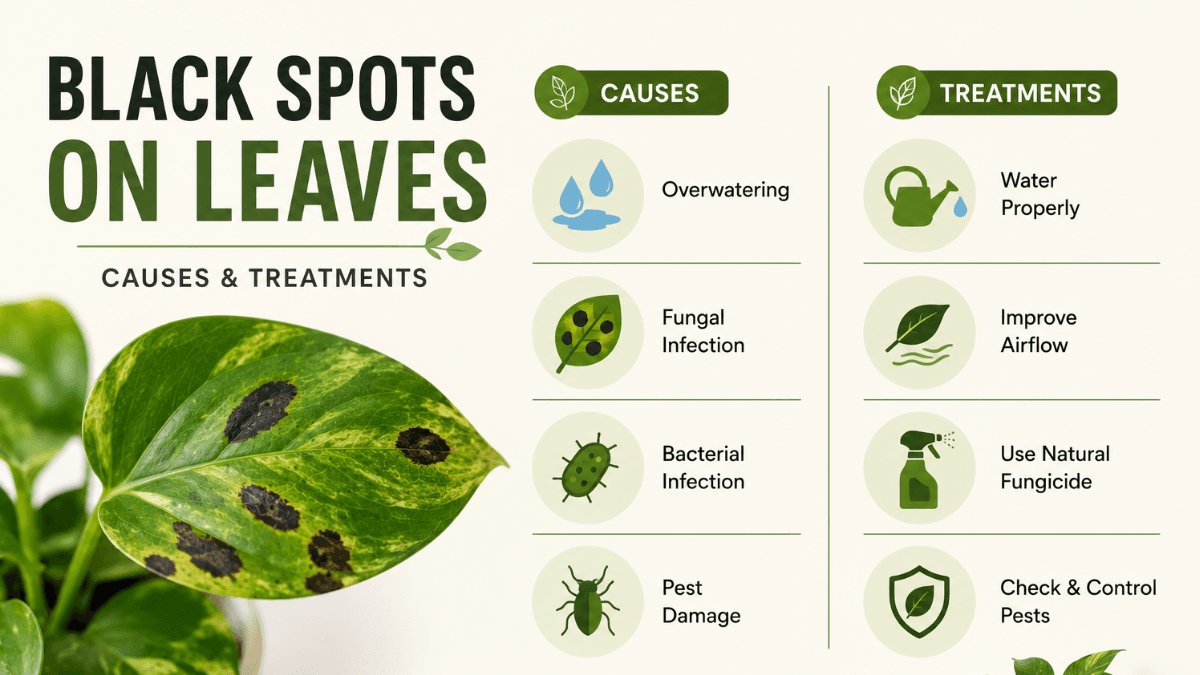
Black Spots on Leaves: Causes and Treatments
Black spots on plant leaves are most commonly caused by fungal infections, bacterial diseases, or environmental stress. You can treat them by:
- Removing affected leaves
- Improving air circulation
- Applying a copper-based or neem oil fungicide
- Adjusting your watering habits
Why Do Plant Leaves Develop Black Spots?
Fungal Infections: The Most Common Cause
Fungal disease is the leading cause of black spots on plant leaves worldwide. The most well-known of these is black spot disease, caused by the fungus Diplocarpon rosae.
Fungi thrive in warm, humid conditions with poor airflow. They spread through water splashing from soil onto leaves, through infected garden tools, and even through the air. Once a fungal spore lands on a leaf surface, it germinates and starts breaking down the plant.
Bacterial Leaf Spot Disease
Bacterial infections cause a different type of spotting. Bacterial leaf spots tend to have more angular, water-soaked margins because the bacteria spread between leaf veins rather than through them. These spots are often dark brown to black and may feel slightly sunken when touched.
Environmental Stress and Cultural Problems
Not every black spot means disease. Sometimes the cause is completely environmental. Common non-disease causes include:
Overwatering leads to root rot, which cuts off oxygen to the roots. When roots cannot absorb nutrients properly, leaves start to show blackening at the tips and edges first, then across the blade.
Underwatering causes leaf cells to die from dehydration. This shows up as dry, crispy black patches, usually starting at the edges of older leaves.
Sunburn on indoor plants happens when they are placed in direct, intense sunlight without acclimatization. The burned patches turn dark brown to black and are usually dry and papery.
How to Identify the Type of Black Spot Your Plant Has?
Before treating black spots on leaves, you need to identify what you are dealing with. Here is a simple way to distinguish between the main types:
- Fungal spots
They are circular or irregular, often with yellow halos, and the spots feel dry or powdery. They usually appear first on lower or older leaves.
- Bacterial spots
They have water-soaked, angular edges that follow the leaf vein pattern. They may look greasy or oily when the infection is fresh.
- Environmental spots
They are usually uniform in location, for example, only at leaf tips, only on one side of the plant, or only on new growth. They tend to appear after a sudden change in conditions.
- Pest-related spots
They come with additional evidence such as webbing, honeydew, or visible insects on the undersides of leaves.
Treating Black Spots on Plant Leaves: Step-by-Step
Once you know the cause, treating black spots on plant leaves becomes straightforward. The approach differs depending on whether the problem is fungal, bacterial, or environmental.
Treating Fungal Black Spots
Step 1: Remove infected leaves immediately. Do not compost them. Bag them and throw them away. Leaving infected leaves on the plant or in the soil lets spores continue to spread.
Step 2: Improve air circulation. Prune crowded branches and space plants properly. Fungi cannot easily establish in well-ventilated environments.
Step 3: Apply a fungicide. Copper-based fungicides and neem oil are both effective and widely used. Neem oil disrupts fungal cell membranes and also has mild insecticidal properties. Apply early in the morning or late evening to avoid leaf burn, and repeat every 7 to 14 days until the spots stop spreading.
Step 4: Avoid wetting leaves when watering. Water the soil level, preferably in the morning, so any moisture that does reach the leaves dries before nightfall.
How to Prevent Black Spots from Coming Back?
Most recurring cases of black spots on garden plants and indoor plants come down to a few fixable habits.
Water correctly. Water at the base of the plant, not from above. Use room-temperature water for indoor plants. Overwatering is the single most preventable cause of both root rot and fungal disease.
Choose disease-resistant plant varieties. Many modern rose and vegetable cultivars are bred with resistance to common fungal diseases. This is especially useful for outdoor garden plants in humid climates.
Practice good garden hygiene. Clear fallen leaves from the soil around plants regularly. Dead plant matter sitting in moist soil is a primary breeding ground for fungal spores.
Use well-draining soil. Poorly drained soil stays wet too long, stressing roots and creating ideal conditions for fungal and bacterial pathogens. Mix in perlite or coarse sand to improve drainage in both pots and garden beds.
Quick Reference: Black Spot Causes and Fixes
| Causes | What It Looks Like | Treatment |
| Fungal infection | Circular spots with yellow halos | Neem oil or copper fungicide |
| Bacterial disease | Angular, water-soaked spots | Copper bactericide reduces leaf wetness |
| Overwatering | Black tips, yellowing leaves, soft stems | Reduce watering, improve drainage |
| Sunburn | Dry, papery black patches | Move to indirect light |
| Cold damage | Sudden widespread blackening | Warm location, trim affected tissue |
| Fertilizer burn | Black leaf edges, crispy margins | Flush soil, reduce fertilizer dose |
Most Affordable Online Plant Nursery in Pakistan
Gulab.pk is Pakistan's best online nursery for buying indoor plants, outdoor plants, seeds, fertilizers, and soil mixes. We deliver across Pakistan and carry a wide range of disease-resistant plant varieties, neem-based organic sprays, and quality potting mixes that help prevent the exact conditions that cause black spots in the first place.