 Chat to Order

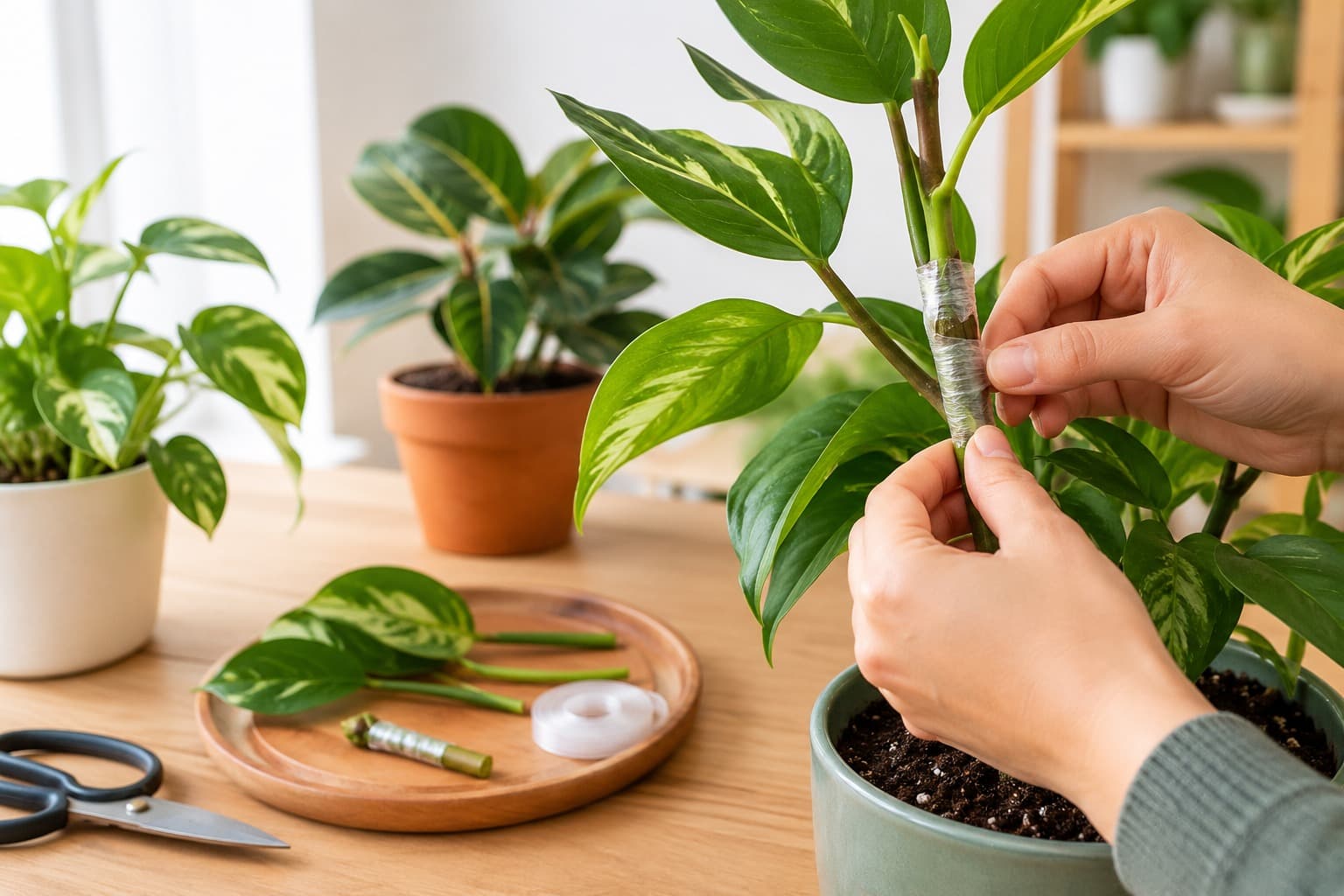
Can Indoor Plants Be Grafted? What You Need to Know
Yes, indoor plants can be grafted but only if the two plants you are trying to graft belong to the same species or genus. Grafting can be used with specific houseplants, like fruit trees and outdoor plants. It is an interesting way to experiment with plant growth if indoor gardening is your hobby.
What Is Grafting in Indoor Plants?
Grafting is a plant propagation method in which two plants of different varieties or species are joined so that they combine and grow as a single organism.
- The upper part, or the scion, gives the stem
- The lower part provides the roots and supports growth of the combined plant
The scion does not create roots because we are not growing a plant from a cutting.
Gardeners normally use grafting to create a plant with the characteristics they like, such as a different appearance or a specific variety on an apt root system for indoor plants.
Some Examples of Indoor Plants That Can Be Grafted
You can graft indoor plants that closely relates to each other in terms of botany. These are some examples.
Cacti and Succulents
Moon cacti are bright plants with neon colours. They are very popular among indoor gardeners. You need to graft them to keep them alive because their top parts do not have chlorophyll required for photosynthesis. Graft them onto a strong green base of a cactus plant, which can be Dragon Fruit.
Remember that these grafted plants do not live more than a few years.
These are some other cacti and succulents that are commonly grafted.
Crested Euphorbia lactea or Crested African Milk Tree
It looks like a coral and is typically grafted onto a straight Euphorbia base.
Crested Myrtillocactus geometrizans or Crested Blue Flame
It is known for its sculptural and fan-shaped growth.
Monstrose Lophocereus schottii or Totem Pole Cactus
Its tall shape benefits from the extra support of a graft. It is usually grafted for these purposes.
- Enhance its appearance
- Prevent rot
- Help it grow more steadily, especially when its natural growth is very slow or does not stay the same
Ficus Plants
They are popular indoor plants, but sometimes need extra help to stay beautiful. You can do grafting to solve this issue. For instance, Ficus Ginseng is created using a grafting technique. The result is a thick, bonsai-style plant with a round stem and leafy top.
People do it by taking a robust rootstock that has a possibility of staying small and compact. Then they graft a leafy and bushy top onto it to make a sculptural mini tree that can be easily maintained and is ideal for keeping in indoor spaces.
Fiddle Leaf Figs and Rubber Trees
People do grafting with these plants to manage leggy growth or to save a plant that can not grow its roots since their roots are very sensitive. You can grow your fiddle leaf fig plant and make it look bushier by grafting a robust top cutting onto a more powerful rootstock.
Citrus Plants
Dwarf citrus trees can grow inside homes and offices, especially near a window if the conditions are appropriate for them. People typically use grafting to combine plants that can bear fruit with a rootstock that can help the new plant grow, enabling the propagation of citrus plants on a large scale.
You can also try grafting with citrus plants that belong to the same species, but keep them at a suitable temperature and provide sunlight.
Grafting Methods and Their Use Cases
| Method | Best suited for | Difficulty |
| Grafting | Combining compatible plant varieties | Moderate to high |
| Stem cuttings | Propagating plants such as pothos | Easy |
| Leaf propagation | Certain succulents | Easy to moderate |
| Division | Plants that grow in separate clumps | Convenient to moderate |
Buy Your Indoor Plants from Gulab.pk
You should look for similar species and carefully prepare for the process if you want to graft two indoor plants with each other. You should start with cactus plants if you are a beginner but you can use ficus plants and dwarf citrus trees if you have experience.
Begin with an easy houseplant cutting before trying this method if you are propagating plants for the first time. You can experiment with grafting an appropriate species after you become comfortable handling plant tissue and caring for new growth. If you want high-quality indoor plants delivered to your home, we recommend checking out the stock at Gulab.pk.