 Chat to Order

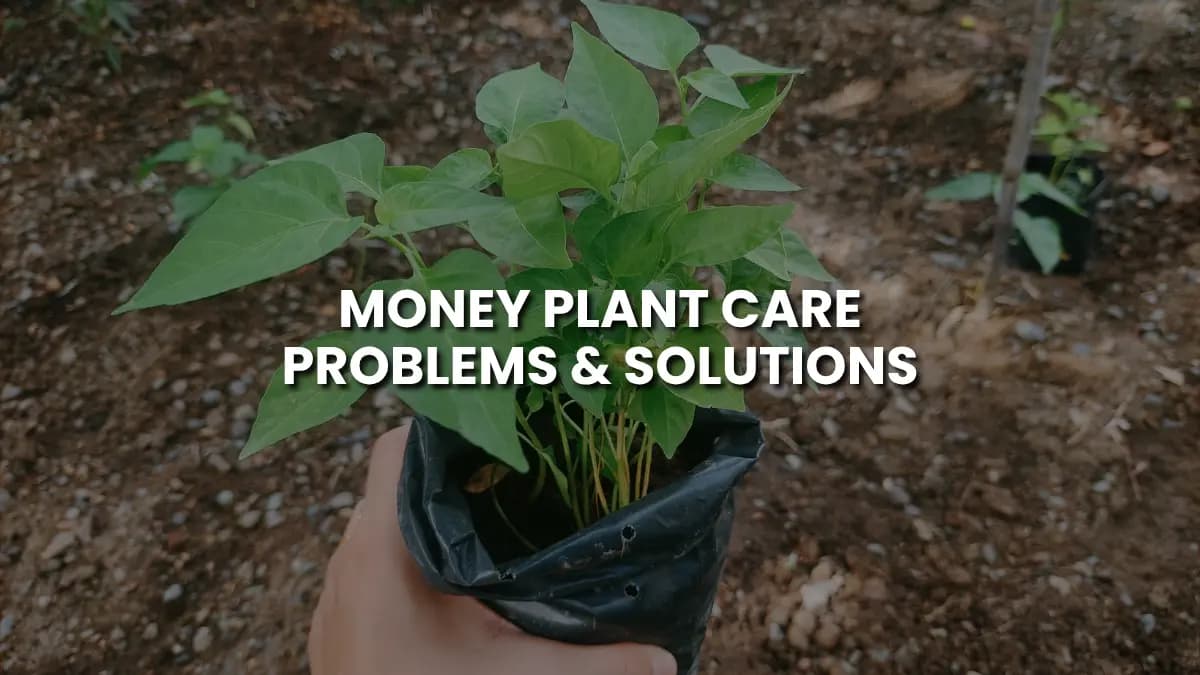
Money Plant Care Problems: Professional Tips From a Horticulturist
The money plant (Epipremnum aureum, or Pothos) is famous for being nearly "unkillable," but it definitely has its drama moments. Whether the leaves are turning yellow or the stems are looking leggy, most issues are a simple plea for a change in environment.
You must have heard common money plant problems like yellowing of leaves, crispy edges, and pale-colored leaves.
Horticulturists at Gulab.pk recommends checking soil moisture and light first for quick fixes. Proper care prevents most problems in humid spots.
Water-Related Money Plant Problems
Overwatering Issues
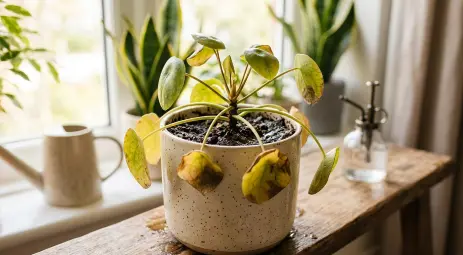
Overwatering is the leading cause of money plant death. If your money plant shows these signs, you might have overwatered it.
- Yellowing leaves starting from the bottom
- Soft mushy stems
- Persistent damp smell from the soil
Expert Fix for Overwatered Money Plant:
Remove the plant from its pot immediately and inspect the roots. Healthy roots appear white or light tan and feel firm. Dark brown or black roots with a slimy texture indicate rot. Trim away all damaged roots using sterilized scissors, cutting back to healthy tissue.
Repot in fresh, well-draining soil. Horticulturists at Gulab.pk recommends a mixture of standard potting soil, perlite, and orchid bark in a 2:1:1 ratio. This combination provides moisture retention while allowing excess water to drain freely.
Not Giving Enough Water to Your Money Plant
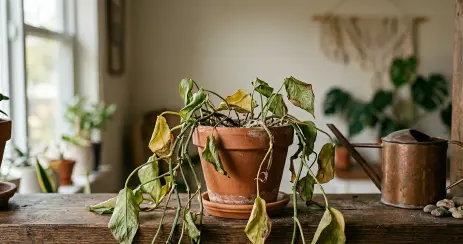
Underwatered money plants cause drooping leaves, curling foliage, dry, crispy leaf edges, and soil that pulls away from the pot edges.
Money Plant Root Rot Treatment You Must Know:
- Remove the plant from its container and wash away all soil under running water to assess the full extent of damage
- Use sharp, sterilized pruning shears to remove all affected roots, cutting several inches above the damaged area into healthy white tissue
- If more than 70% of the root system is compromised, consider taking healthy stem cuttings for propagation instead
- Treat remaining healthy roots with a dilute hydrogen peroxide solution
- Repot in completely fresh soil. Use a terracotta pot if possible
Growth-Related Money Plant Problems: Why Your Money Plant Is Not Growing?
There are several factors that can affect the growth of a money plant. These tips are perfect for growing your money plant easily at home.
Not Getting Enough Light
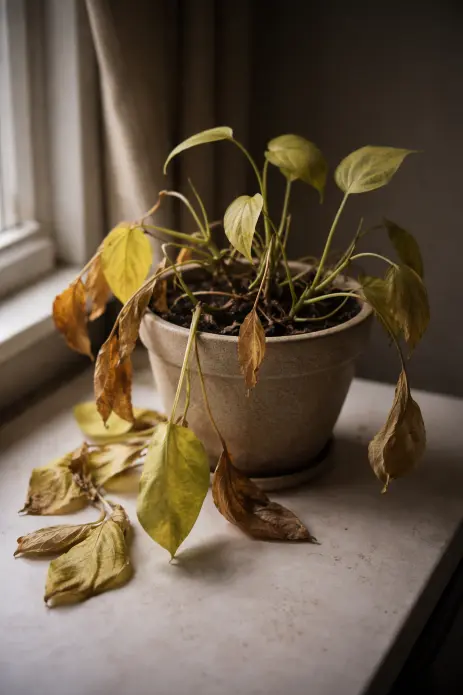
While these plants tolerate low light, they won't actively grow without adequate brightness. In dim conditions, they enter survival mode, which means they grow extremely slowly or do not grow at all.
Nutrient Deficiency Limiting Growth
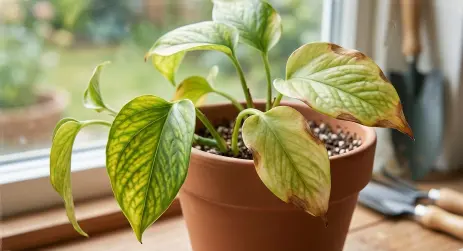
Even with optimal light and water, a lack of nutrients prevents growth. Money plants are moderate feeders that deplete soil nutrients within 3-4 months of potting.
Rootbound Conditions
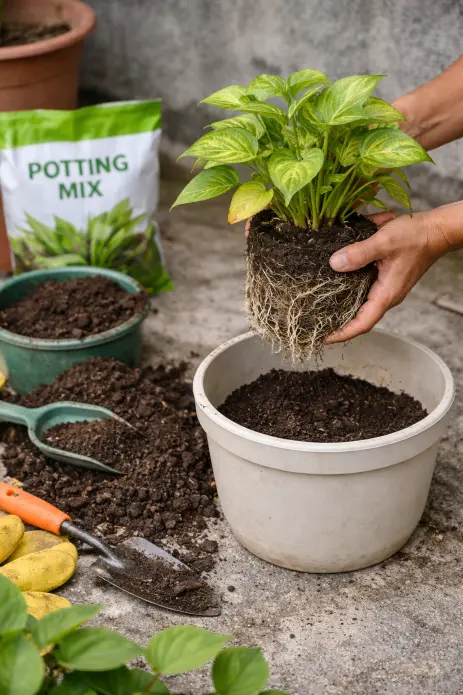
Money plants typically need repotting every 18-24 months. When roots circle the pot interior or emerge from drainage holes, the plant is rootbound and cannot access adequate nutrients or water.
Environmental Stress
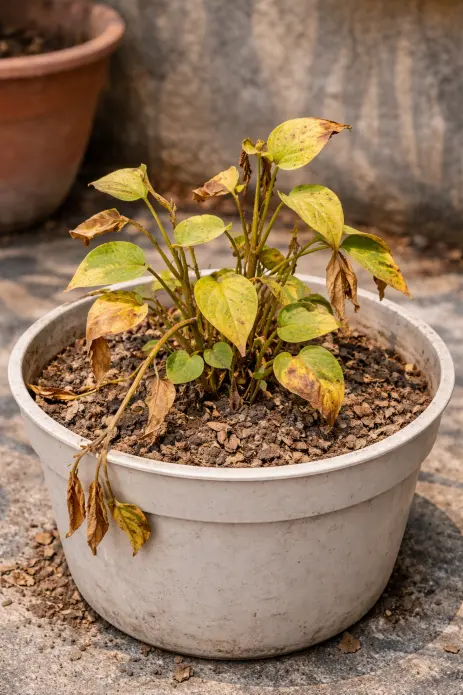
Money plants dislike cold drafts (air conditioning vents, cold windows in winter) and sudden temperature swings. Growth slows significantly if temperatures drop below 60°F (15°C).
Common Leaf Discoloration Issues in Money Plants and How to Fix Them?
| Problem | Likely Cause | Quick Fix |
| Yellowing leaves | Overwatering or poor drainage | Let the top 2 inches of soil dry out before watering again. Ensure the pot has drainage holes. |
| Brown, crispy edges | Low humidity or underwatering | Mist the leaves regularly or place a pebble tray with water nearby. |
| Pale/Bleached Leaves | Too much direct sunlight (sunburn) | Move the plant to a spot with bright, indirect light. |
| Loss of Variegation | Too little light (the plant produces more chlorophyll to compensate) | Move to a brighter spot to bring back the white/yellow splashes. |
Soil and Root Health Problems
Poor Drainage Complications
The best soil for money plant growth must balance moisture retention with drainage. Heavy, compacted soil leads to waterlogging, root suffocation, and eventual rot.
Soil Compaction Issues
Over time, organic matter in potting soil breaks down, becoming dense and water-repellent. Compacted soil prevents both water penetration and air circulation around roots.
Expert Solution: Repot in a fresh mix every 18-24 months, even if the plant hasn't outgrown its container. This refreshes the soil structure and replenishes depleted nutrients.
Prevention Strategies to Save Your Money Plant From Problems
Use well-draining soil with perlite, fertilize diluted monthly in summer (avoid winter), and rotate the plant for even growth. In Pakistan's climate, acclimate to indoor warmth (18-27°C) and quarantine new plants. Repot annually if roots crowd, boosting health for vertical gardens.
What Does a Healthy Money Plant Look Like?
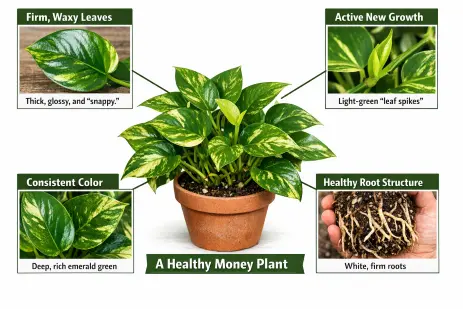
A happy money plant should feel firm and look vibrant. If your plant meets these criteria, you’re doing a great job:
- Firm, Waxy Leaves: The leaves should feel slightly thick and "snappy," not limp or paper-thin. Healthy leaves have a natural, subtle sheen.
- Active New Growth: You should see new, light-green "leaf spikes" emerging from the ends of the vines or near the base of the soil during the spring and summer.
- Strong Aerial Roots: Healthy plants often grow brown, nub-like roots along the stem. These aren't "growths" to worry about; they are signs the plant is looking for something to climb or more moisture to grab.
- Consistent Color: While variegation (the white or yellow spots) varies, the green parts of the leaf should be a deep, rich emerald, not a faded yellow-green.
- Root Structure: If you were to peek at the roots, they should be firm and white or tan, never mushy, black, or smelly.
Buy Healthy Money Plants From Gulab.pk
Gulab.pk is a top-tier choice for sourcing money plants that are already thriving. Buying from a reputable online nursery like Gulab.pk helps you avoid the common "nursery shock" that often happens with lower-quality plants.