 Chat to Order

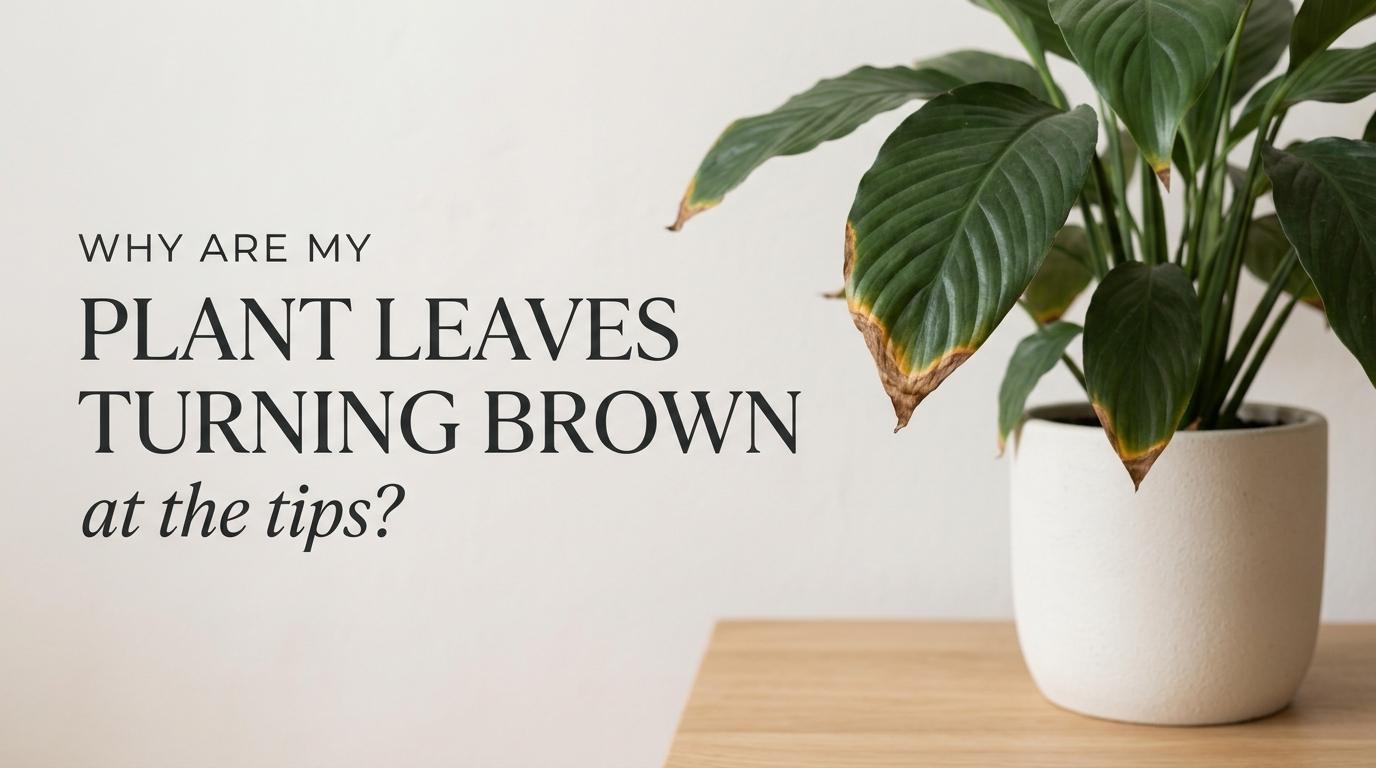
Plant Leaves Turning Brown at the Tips: Causes and Fixes
You water on schedule. You turn the pot toward the window. Then you notice one morning that the tips of the leaves of your favorite plant have become brown. Do not worry, as we can help you find the causes and the solutions.
We know that brown tips on a plant look like a big problem, but that does not mean your plant is destroyed. We want you to think of it as a sign that your plant has an issue that needs to be solved. We can tell you that mostly the solution is small and quick.
Let’s work out what your plant is trying to tell you.
Why Do Leaf Tips Turn Brown First?
Leaf tips sit at the very end of the plant’s plumbing. Water and nutrients reach them last, so any hiccup in supply shows up there first. It’s like the final house on a street with weak water pressure. That house notices before anyone else.
The damage itself is simple. Cells at the edge dry out and die, and dead cells never turn green again. So brown tips won’t heal, even after you solve the problem. Only fresh growth will come in clean. Don’t panic when the old brown stays put.
Common Causes of Plant Leaves Turning Brown at the Tips
Not Watering Regularly
Underwatering can make plant leaves look brown, but they have a specific texture and look. Plants that do not get sufficient water usually create dry and flaky leaf edges. Their vegetation can sag and feel slender or papery, and the soil can begin to pull away from the edges of the container because it becomes super dry.
A plant prefers to live than focusing on the upkeep of its leaves if it does not get water for a long time, which causes browned leaves and the ultimate falling of leaves. Our horticulturist team has written a full guide on how to fix drooping leaves for beginners. Go and check that out.
Overwatering
Another big cause is overwatering. The roots find it hard to get oxygen when a plant gets more water than it requires, which may ultimately cause root damage. The leaves can turn yellow before they slowly change their colour to brown.
The stems may appear soft or pulpy, and the soil usually stays wet for an exceedingly long time. There can be a slightly tangy or damp odour coming from the container.
Our plant experts have noticed that soil that stays wet for a long time chokes roots, stopping them from working correctly and ruining the vegetation.
Dry Indoor Air
The leaves of indoor plants can turn brown due to the dry air coming from air conditioners and heaters, which quickly removes moisture from them. The leaves do not have enough time to get the same amount of water from their roots, as they are constantly exposed to ACs and heaters.
Calatheas and spider plants are two plants that react first. Are you planning to put a spider plant in your office? Better read this piece first before buying it.
An Excess of Salt
Tap water and fertilizer leave mineral salts behind. Over months, a white crust appears on the soil surface or around the drainage hole, and those salts burn the tips from the inside. It’s a sneaky one. Many of us add more fertilizer to help a struggling plant, which makes things worse.
Sun Burning
A hot afternoon through a west-facing window can fry leaves. This kind of browning looks patchy and bleached rather than tidy.
Water Quality
Chlorine and fluoride bother sensitive plants such as prayer plants. Hard water does similar harm over time.
Quick Diagnosis Table
Not sure which culprit you’re dealing with? Match what you see below.
What You See
| Likely Cause
| First Fix
|
| Crispy tips and a very light pot | Underwatering
| Soak deeply, then set a routine |
| Brown tips, yellow leaves, wet soil | Overwatering | Let soil dry and check the roots |
| Crispy edges in a dry room | Low humidity
| Group plants or use a pebble tray |
White crust on the soil
| Salt buildup
| Flush the soil with water
|
| Bleached patches near a window | Sun scorch
| Move the plant back from the glass |
How to Fix Brown Leaf Tips
- Check the plant before you pour water. Water it only if the soil feels dry
- Run water slowly through the pot for a couple of minutes, then let it drain fully. Repeat every three months to wash out salts.
- Let tap water stay in the pot overnight so the chlorine fades, or collect rainwater when you can.
- Use clean scissors to trim leaves and follow the natural leaf shape. Leave a thin brown edge so you do not cut into living tissue.
When Brown Tips Mean Something More
Sometimes it isn’t a simple watering slip. Watch for these signs:
- Browning that spreads across several leaves within a week
- Fine webbing under the leaves, which points to spider mites
- New leaves that emerge already brown
Gulab.pk Is The Best Online Nursery in Pakistan
You can easily identify the root causes of brown leaves in your plants and then apply the specific solution we have mentioned. You can find high-quality plants and fertilizers at Gulab.pk. We have a wide collection of indoor and outdoor plants and seeds that are available at discounted prices.