 Chat to Order

Signs Your Plants Are Over-Fertilized (And How to Fix It)
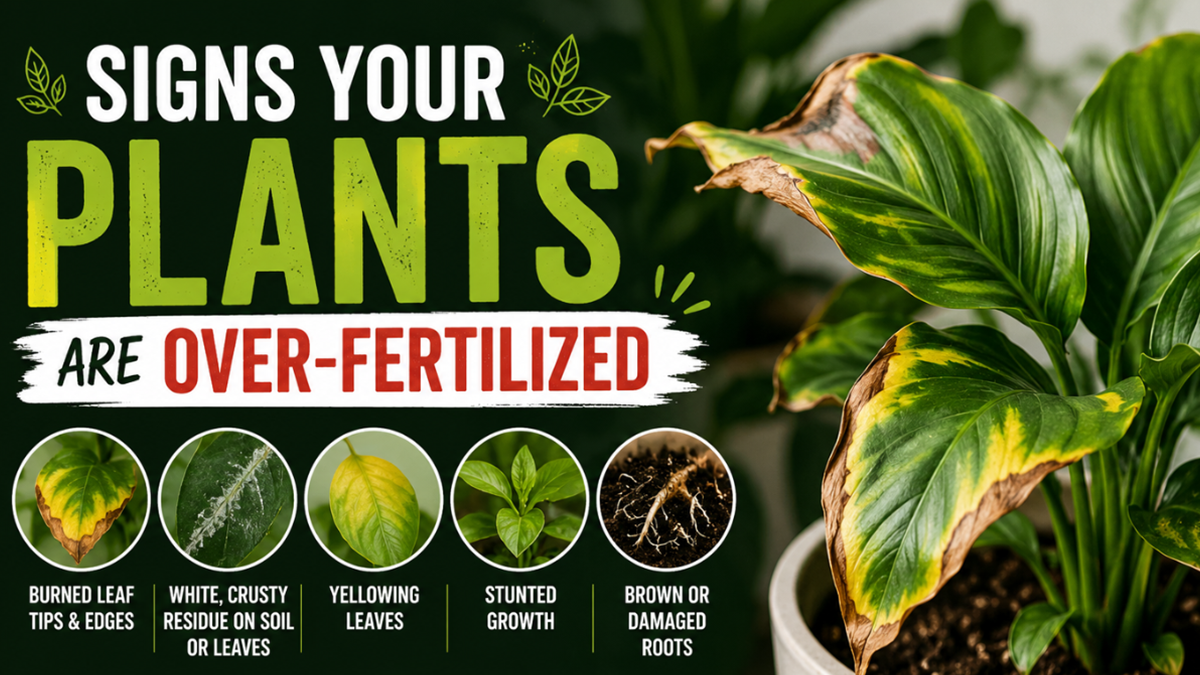
The number one sign your plant is over-fertilized is the accumulation of mineral salt compounds in its soil. Other signs include:
- Yellowing or wilting lower leaves.
- Browning or burned tips and edges.
- Very slow growth or no growth at all.
- Leaves are dropping earlier than normal.
When you over-fertilize the plant, excess salts build up in the soil, and they draw moisture away from the roots through osmosis. It starves the plant of water and nutrients, even when you are watering regularly.
The over-fertilized plants can be rescued if you catch the signs early and act quickly. Here are some tips that I have tried myself as a professional horticulturist to treat the overfertilization issue in plants.
What Over-Fertilized Plants Actually Look Like
There are some very consistent patterns that show up across different plant types.
Leaf Tip Burn and Yellowing
The earliest and most recognizable sign is brown and crispy leaf tips. This happens because salt buildup interrupts how the plant moves water from roots to leaves. The outer tissue, which is the last to receive water, shows the damage first.
Wilting Despite Adequate Watering
This one throws people off the most. A plant that is wilting even though the soil feels moist is not thirsty. It is likely dealing with root stress caused by salt accumulation.
White Crusty Buildup on Soil Surface
A white or yellowish crust forming on top of the soil or around the drainage holes of a pot is a clear sign that your plant is over-fertilized.
Stunted or Distorted New Growth
Ironically, too much fertilizer can actually slow down growth rather than speed it up. New leaves may come in a small size or with an unusual dark green color caused by nitrogen excess. Roots may also start to turn brown and mushy at the tips.
How to Fix Over-Fertilized Plants: Step by Step
The core goal when treating an over-fertilized plant is to flush out the excess salts and give the roots a chance to recover. Here is the step-by-step process to do that:
Step 1: Stop all fertilizer immediately
Do not add anything else to the soil until the plant has fully recovered. This might feel counterintuitive if the plant looks weak, but adding more nutrients at this point will only make things worse.
Step 2: Flush the soil with clean water
Take the pot to a sink or outdoors and water it slowly and thoroughly. Repeat this two to three times over a couple of hours. This process physically pushes the dissolved salts out of the root zone.
Step 3: Check the drainage
If your pot has poor drainage, salty water would sit around the roots. Make sure the drainage holes of your pot are clear, and the soil is not compacted.
Step 4: Repot if the damage is severe
If the white crust is thick, the roots look brown and mushy, or the plant is not responding after flushing, repotting with fresh, well-draining potting mix is your best option. Trim off any dead roots you find, and let the root ball air for 20 to 30 minutes before placing it in new soil.
Step 5: Move the plant to indirect light
A stressed plant should not be dealing with intense sunlight on top of everything else. Give it a recovery spot with bright but indirect light and consistent temperatures.
How Long Does Recovery Take?
Recovery time depends on how severe the salt buildup was and how quickly you acted. However, here is a general timeline that I suggest every beginner gardener keep in mind to set clear expectations.
| Severity | Expected Recovery Time |
| Mild (leaf tip burn only) | 1 to 2 weeks with flushing and adjusted care |
| Moderate (wilting, yellow leaves) | 3 to 5 weeks with flushing or repotting |
| Severe (root damage, widespread dieback) | 6 to 10 weeks, may require pruning and repotting |
Expert Tip from a Horticulturist at Gulab
Be patient. If your treatment is taking time, don’t think that it is not working. As long as the plant is producing any new green growth, it is on the right track.
Does Over-Fertilization Actually Kill Plants?
It can, but it usually does not happen overnight. The progression is gradual, and the damage can become permanent if root rot sets in or if the plant is already weakened.
That said, many plants, especially common houseplants and hardy outdoor varieties, are surprisingly resilient. If you catch the problem at the leaf tip (in early stages), you can potentially save the plant from damage.
Next Step: Fertilize Your Plant Properly
The best way to handle over-fertilization is to prevent it from happening again. A few simple habits go a long way.
Follow the "Less Is More" Rule
With fertilizer, a smaller, consistent dose does far less damage than an occasional large one. Most plants do better with half the recommended dose.
Match Fertilizer Type to Plant Stage
- Seedlings and newly transplanted plants: avoid fertilizer entirely for the first 4 to 6 weeks
- Actively growing plants: balanced NPK formula works well during the growing season
- Dormant plants: no fertilizer needed; the plant is not actively absorbing nutrients
Use Slow-Release Fertilizers for Pots
Granular slow-release fertilizers are much more forgiving in containers than liquid concentrates. They release nutrients gradually.
Quick Checklist: Are You Over-Fertilizing?
Run through this before your next feeding session:
- When did I last fertilize this plant?
- Am I using the correct dilution for the fertilizer type?
- Is the plant currently in its active growing season?
- Have I watered the plant recently before fertilizing?
- Does the soil already have a white crust or buildup?
- Is this plant a low-nutrient species like a succulent or fern?
If you answered yes to multiple concern areas here, it is worth holding off on fertilizing.
Shop Plants, Fertilizers, and Seeds in Pakistan at Gulab.pk
Whether you are starting fresh after a fertilizer mishap or looking to build a healthier indoor garden from scratch, having the right plants and the right products matters. Gulab.pk is one of Pakistan's most trusted online plant nurseries, serving plant lovers across Karachi, Lahore, Islamabad, and beyond.