 Chat to Order

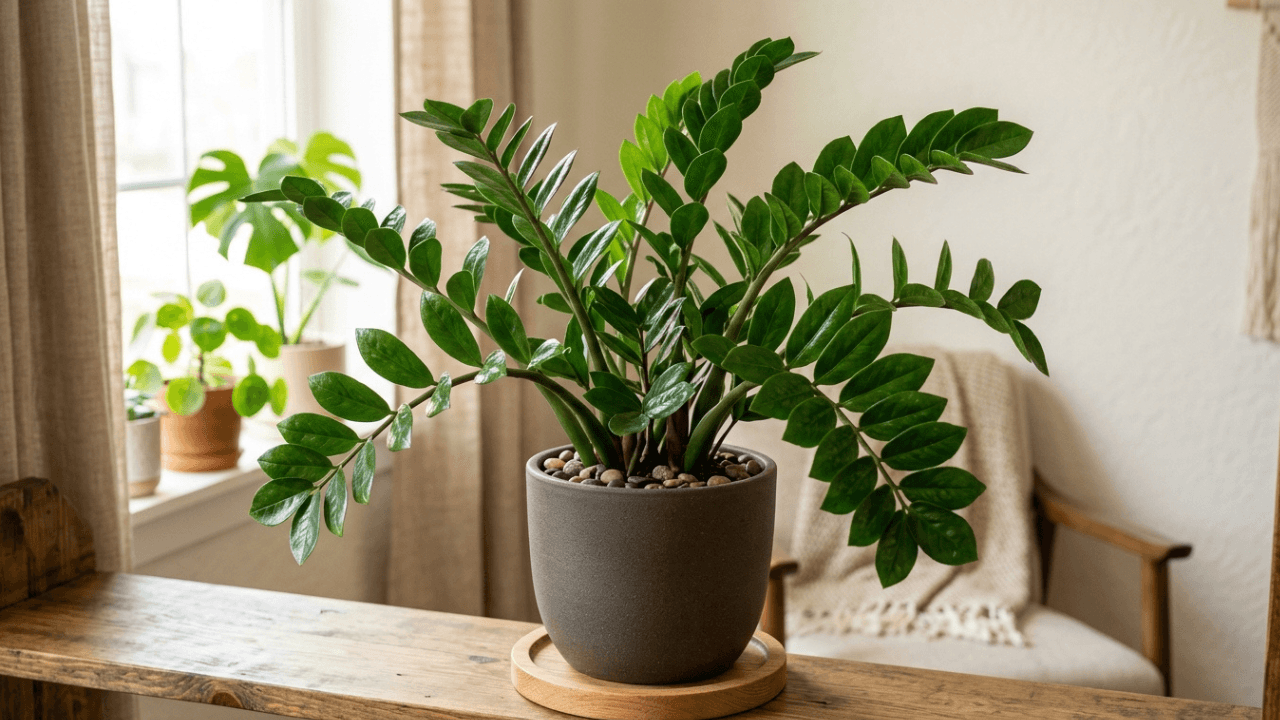
ZZ Plant Care Guide by Expert Horticulturist
A ZZ plant care guide comes down to three rules: bright but indirect light, soil that dries all the way out between waterings, and a pot with drainage holes.
Get those three right and Zamioculcas zamiifolia grows for years. That is the short version. Here is how to care for a ZZ plant well enough that it thrives, not just survives, through every season.
ZZ Plant Indoor Care: Getting the Light Right
ZZ plants tolerate low light better than almost any other houseplant sold in Pakistan.
Bright, indirect light still gives the best results and the fastest growth to indoor plants. A spot a few feet back from an east or north-facing window works well in most Pakistani homes.
Signs Your ZZ Plant Is Getting the Wrong Light
Pale, stretched stems leaning toward one side: the plant wants more light.
White or scorched patches on leaves: direct sun is scalding the foliage; pull it back from the window.
Curled, yellowing leaflets: often too much direct afternoon sun, common in Karachi through the peak summer months.
ZZ Plant Care Tips for Watering
Overwatering kills more ZZ plants. Yellow leaves and mushy rhizomes are the first sign you have gone too far the other way.
Soil and Feeding for Steady ZZ Plant Maintenance
Plant a ZZ in a loose, well-drained mix. A peat- or bark-based potting soil works fine as well.
A pot with a drainage hole matters more than the exact soil brand you pick.
Use a light hand when feeding. A balanced liquid houseplant fertilizer at half strength suits a slow-growing plant like this one.
Gulab.pk's organic fertilizer range is built for Pakistan's clay-heavy and sandy soils, so a light dose worked into the potting mix at spring repotting does the job well.
Temperature and Placement of the Plant
ZZ plants prefer warm rooms, about 55°F and 80° F, as per the University of Connecticut Home & Garden Education Center's ZZ plant fact sheet.
That range covers most living rooms and offices across Karachi, Lahore, and Islamabad for the better part of the year.
Common ZZ Plant Problems and Quick Fixes
Most ZZ plant problems trace back to water. Match the symptom below to the likely cause before reaching for any treatment.
| Symptom | Likely Cause | Fix |
| Yellow leaves, mushy stems | Overwatering | Stop watering, check the rhizome, repot in dry mix if soft |
| Drooping Leaves | Underwatering or shock after repotting | Water deeply once, then resume the normal schedule |
| Small brown bumps on stems | Scale insects | Wipe off with a damp cloth or treat with a mild pesticide |
| No new growth for months | Low light or a cold room | Move to a brighter spot and check the room temperature |
ZZ Plant Care Instructions for Propagating New Plants at Home
Growing new plants from an existing ZZ plant costs nothing and gives you extras to share with friends who ask for the same care instructions.
- Snip a healthy leaf close to the stem.
- Let the cut end callous over for a few hours before planting.
- Push the stem end into moist, well-drained potting mix.
- Keep it in indirect light with soil that stays just moist.
Division works faster if your plant already carries multiple stems. Separate a rhizome clump with its own roots and pot it on its own.
Bring Home a ZZ Plant From Gulab.pk
A ZZ plant rewards patience. Get the light, water, and soil roughly right, and it keeps growing long after fussier houseplants have given up.
Gulab.pk delivers healthy, botanist-inspected plants across Karachi, Lahore, Islamabad, and other major cities. Browse the indoor plants collection or message our team for guidance.
FAQs About ZZ Plant Care
How often should I water my ZZ plant?
Water only once the soil has dried out: about every two to three weeks in summer, and once a month or less in winter.
Why are my ZZ plant's leaves turning yellow?
Yellow leaves almost always point to overwatering. Check the rhizome, and if it feels soft or mushy, cut back on watering right away.
Can a ZZ plant grow in a windowless room?
Yes. It tolerates low light and even fluorescent office lighting, though growth slows without any natural light.
Is the ZZ plant toxic to cats and dogs?
It carries a medium poison severity from calcium oxalate crystals in its leaves, so keep it out of reach of pets that chew on foliage.
How fast does a ZZ plant grow?
Growth is slow by design, reaching two to four feet over several years indoors.