 Chat to Order

What Are Common Mistakes in Vertical Gardening?
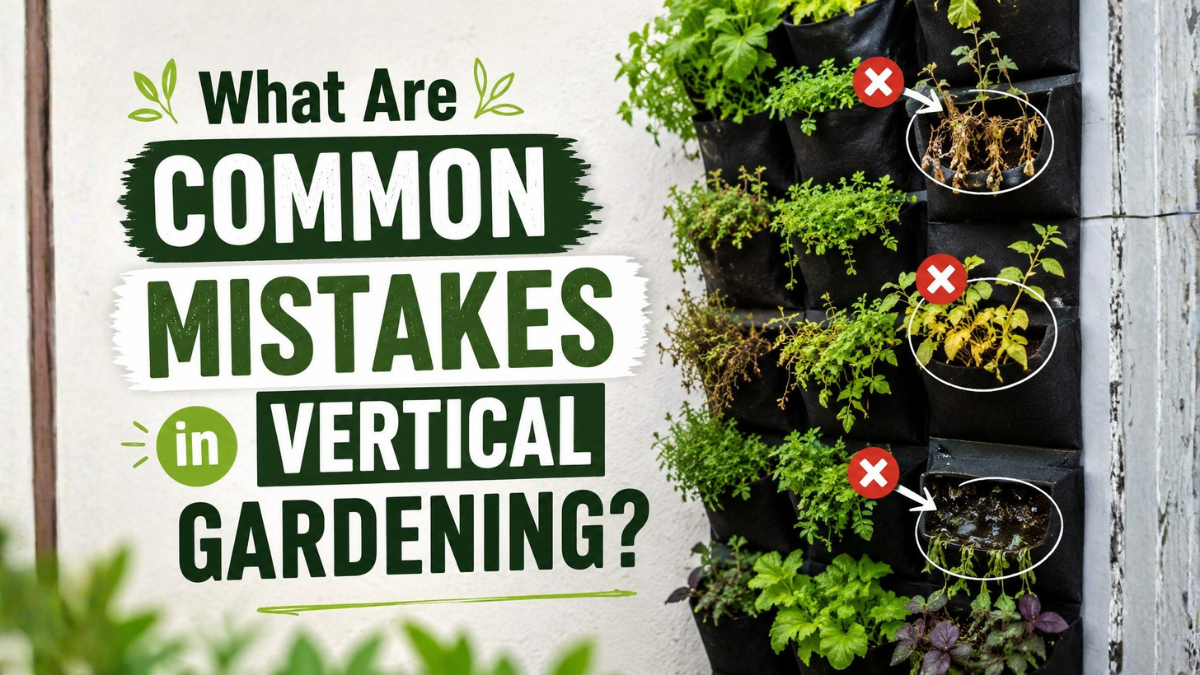
Vertical gardening fails most often because of three core problems: improper watering, wrong plant choices, and poor structural planning. Most beginners set up their vertical garden with good intentions, but skip the foundational steps that damage their entire vertical garden setup.
Get those three things right from the start, and you will avoid about 80% of the problems that kill vertical gardens before they even take off.
Mistake # 1: Overwatering
People water vertical gardens the same way they water pots on the ground. Not having a proper watering schedule is the first big error.
In a vertical setup, water moves quickly downward. The top pockets or containers dry out fast, while the bottom ones stay soggy. This uneven moisture creates two problems at once: drought stress at the top and root rot at the bottom.
How to Fix it?
As an expert horticulturist at Gulab, I'd suggest that every beginner gardener water the top sections more frequently and in smaller amounts. Let the bottom sections dry slightly between waterings. A moisture meter costs very little and saves a lot of plants.
A good rule of thumb: Push your finger about two inches into the soil. If it feels dry, water. If it feels cool and damp, wait another day.
Mistake # 2: Poor Drainage
Without proper drainage, even the right watering schedule cannot save your plants. Water sits around the roots, creates anaerobic conditions, and invites fungal infections.
Poor drainage in vertical gardens is caused by:
- Containers or pockets without drainage holes
- Using regular garden soil instead of a lightweight potting mix
- Placing the vertical frame flush against a solid wall with no airflow behind it
- Overcrowding plants so roots compete for limited drainage space
How to Fix it?
The best practice is to use a well-draining potting mix specifically designed for containers. Mix in perlite or coarse sand to improve drainage further. You can also use fabric pocket planters to naturally allow excess water to escape.
Mistake # 3: Ignoring Nutrient Needs of Vertical Garden
Plants grown vertically in containers do not have access to the natural nutrient cycle of in-ground soil. Rain does not wash nutrients down from the surrounding earth. Beneficial microbes are limited. This means your vertical plants depend almost entirely on what you feed them.
How to Fix It?
Use a slow-release granular fertilizer at planting time and supplement with a liquid fertilizer every two to three weeks during the growing season. For indoor vertical garden care, reduce feeding in winter when plant growth naturally slows.
Mistake # 4: Structural Failure of Vertical Garden Setup
A vertical garden can be surprisingly heavy. Wet soil is dense. Mature plants add more weight. A structure that looked solid when empty can buckle or pull away from a wall months later, once everything is in place.
This is one of the most dangerous vertical garden setup mistakes because it can cause property damage and even injury.
How to Fix It?
- Calculate the total weight, including saturated soil, containers, and full-grown plants
- Use wall anchors rated for at least twice the expected load
- Avoid mounting on drywall alone; anchor into studs or use a freestanding frame instead
- Check the structure every few months for signs of stress: bent brackets, cracks near anchor points, or tilting
Mistake # 5: Pest Problems
Pests behave differently in vertical gardens. In a traditional garden, you usually spot pest damage early because you are close to the soil and leaves. In a vertical garden, the upper sections are often at eye level or above, and the back of the leaves is hard to inspect.
Common vertical garden pest problems include:
- Spider mites: Thrive in dry, warm conditions. Leave fine webbing on the underside of leaves.
- Fungus gnats: A sign of overwatering. Larvae damage roots in the top few inches of soil.
- Aphids: Cluster on new growth. Spread quickly from one pocket to the next in a vertical setup.
- Whiteflies: Common in indoor vertical gardens, especially in poorly ventilated spaces.
How to Fix It?
In my decade of gardening experience, I’d suggest inspecting the back of leaves at least once a week. Good airflow behind the vertical structure reduces the humid conditions that most pests love. Spacing plants so leaves do not overlap also helps enormously.
Mistake # 6: Root Bounding
Because vertical garden pockets, modular tiles, and felt sleeves are inherently space-constrained, plants run out of runway much faster than they would in the ground or in large pots. When aggressive growers run out of room, their roots circle the pocket endlessly.
How to Fix It?
Treat a living wall as a dynamic system, not a static painting. Every spring, gently pull a few plants out to inspect their roots.
Quick Reference: Vertical Gardening Mistakes vs. Fixes
| Common Mistakes | Why It Happens | What to do Instead |
| Overwatering | Treating vertical gardens like ground beds | Water by section based on moisture level |
| Poor Drainage | Wrong soil, no drainage holes | Use a lightweight soil mix |
| Nutrient Neglect | Forgetting that containers leach nutrients | Fertilize every 2 to 3 weeks in the growing season |
| Structural Failure | Underestimating the loaded weight | Anchor into studs, calculate weight before mounting |
| Pest Problems | Hard to inspect all leaves on vertical panels | Weekly underleaf inspection |
| Root Bounding | Limited space | Regular root inspection |
Get Plants For Your Vertical Garden From the Best Online Nursery
Vertical gardening is genuinely rewarding, but it asks you to pay attention to details that traditional gardening does not always demand. Once you understand the fundamentals, you can avoid the mistakes and grow a thriving indoor vertical garden.
Gulab.pk has the best collection of seasonal plant varieties, fruit trees, flower plants, fertilizers, seeds, and outdoor plants. Order now and decorate your indoors with greenery this season.