 Chat to Order

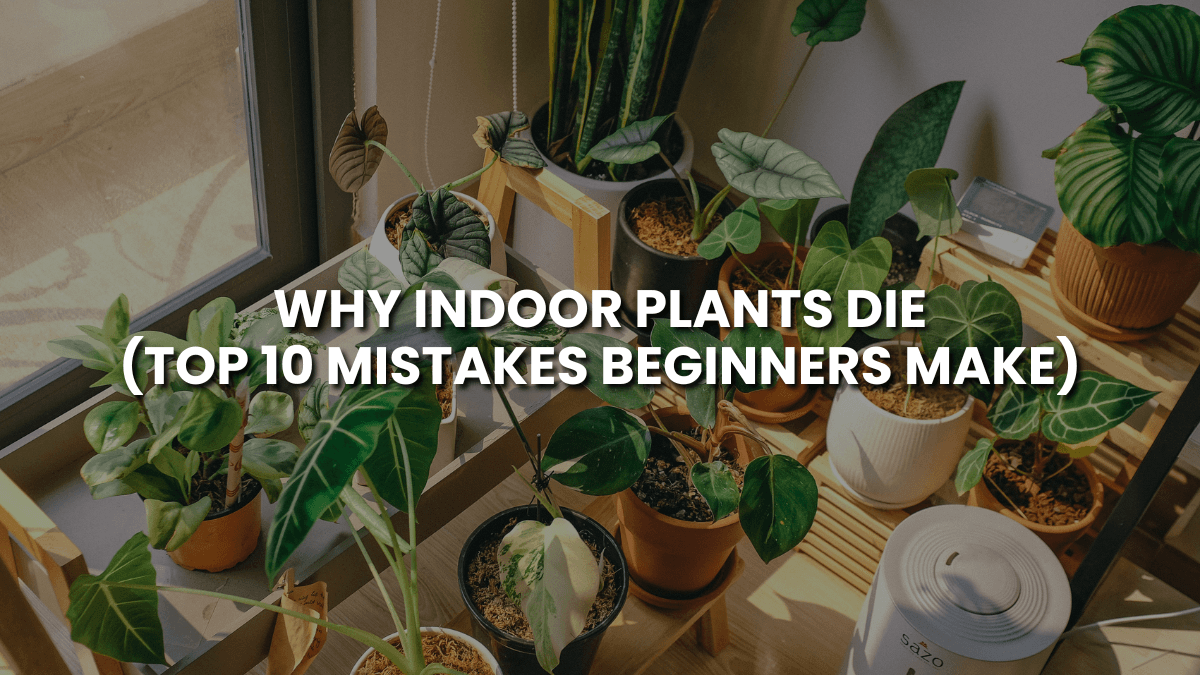
Why Indoor Plants Die (Top 10 Mistakes Beginners Make)
The number one reason plants die is overwatering. Beginners love their plants too much, and therefore, they don’t have any idea how often indoor plants need water.
Other reasons plants die so early are:
- Poor lighting
- Wrong soil
- Underwatering
- Overfertilizing
- Not caring about the humidity requirement
- Ignoring repotting
Here are the top 10 most common reasons houseplants fail, and what to do to revive those dead plants.
Top 10 Mistakes That Kill Indoor Plants and How to Fix Them
Mistake # 1: Overwatering
What many beginner gardeners don't realize is that a drooping plant is not always a thirsty plant.
The most effective way is to check if your indoor plant needs water. Stick your finger an inch into the soil. If it feels damp, wait another day or two. Make sure your pot has drainage holes. Water sitting at the bottom of a pot with no way to escape is a fast track to root rot.
Mistake # 2: Giving Them Too Little Light
A plant that is not getting enough light will tell you: pale or yellowing leaves, very slow growth, or stems that stretch and lean toward the window. Most tropical houseplants need bright indirect light for at least four to six hours a day.
Mistake # 3: Wrong Soil
Potting soil is not all the same, and using the wrong mix is something that commonly causes a plant to decline suddenly, even when everything else seems fine.
As a professional horticulturist, I advise beginners to always use a mix formulated for the type of plant you have, and pair it with a pot that drains well.
Mistake # 4: Ignoring Temperature and Drafts
Most houseplants come from tropical or subtropical climates. They do not enjoy cold drafts from air conditioning vents, single-pane windows in winter, or doors that open to the outside.
Keep your plants away from vents, radiators, and drafty spots. A consistent room temperature between 18°C and 24°C is a good range.
Mistake # 5: Low Humidity
Signs of low humidity include brown, crispy leaf edges, curling leaves, and increased vulnerability to pests.
Simple fixes include grouping plants together (they release moisture through transpiration), placing a shallow tray of water and pebbles beneath the pot, or running a small humidifier nearby.
Mistake # 6: Over-Fertilizing
Plants need nutrients, but more is not better. Excess fertilizer builds up salts in the soil that burn roots and damage the plant from the ground up.
Here is how to fix it:
Fertilize during the active growing season (spring and summer) at half the recommended dose, and stop entirely in fall and winter when most plants are resting.
Mistake # 7: Skipping Repotting
The following are the major signs that your plant needs repotting:
- Roots coming out of the drainage holes
- Soil is drying out unusually fast
- Growth has stalled
How to Fix it?
Choose the right container for repotting and ensure the new pot has functional drainage holes to prevent waterlogged soil.
Mistake # 8: Dusty Leaves
A thick layer of dust on leaves blocks light absorption and clogs the tiny pores. Over time, this reduces the plant's ability to photosynthesize efficiently.
As a beginner, you must know how to clean the indoor plant leaves. Here are some tips:
- Use a soft cloth for wiping leaves
- Always wipe in one direction
- Don't forget to wipe under the sides of leaves
- Dry the leaves in indirect sunlight instead of direct light
Mistake # 9: Pest Infestations
Spider mites, mealybugs, fungus gnats, and scale insects are some of the most common houseplant pests. They do their damage quietly. By the time most beginners notice, the infestation has already spread.
Make it a habit to check the undersides of leaves and the soil surface when you water. Catching pests early means you can treat with a simple neem oil spray or insecticidal soap rather than dealing with a full-blown outbreak.
Mistake # 10: Choosing the Wrong Plant for Your Space
Not every plant is right for every home. Therefore, it is necessary to know which low-maintenance indoor plants are best to grow.
Some of the most common plants are:
- Spider Plant
- Pothos
- Bird’s Nest Fern
- ZZ Plant
- Peace Lily
Can a Plant Actually Recover Once It Starts Dying?
Yes, in most cases, a dying plant actually recovers if you figure out what went wrong and follow the steps to revive it.
Step one is to take the plant out of its pot and inspect the roots. Trim away any rotted roots with clean scissors and let the remaining roots air out for an hour before repotting in fresh, dry soil.
Step two is to move the plant somewhere with good indirect light and a stable temperature. Avoid direct sun on a weakened plant.
Step three is to hold back on watering until the soil is genuinely dry. This gives the plant time to stabilize.
Step four is patience because new growth may take two to four weeks to appear.
How to Save a Plant That Looks Like It's Dying
This is how you can revive an indoor plant when you feel like it's dying.
- Start by assessing the roots first. If the roots are mostly healthy, the plant has a strong chance of recovery.
- Move it to a spot with consistent, bright indirect light.
- Stop fertilizing entirely until you see new growth.
- Water sparingly and only when the soil has dried out.
- Remove dead leaves.
Get Healthy Indoor Plants for Your Home
Gulab.pk is the best online plant nursery in Pakistan, where you will find a wide variety of indoor plants, fruit trees, outdoor plants, herbs, and multienvironment plants. Browse and order your favorite plant today at affordable prices and decorate your home with lively green spaces.