 Chat to Order

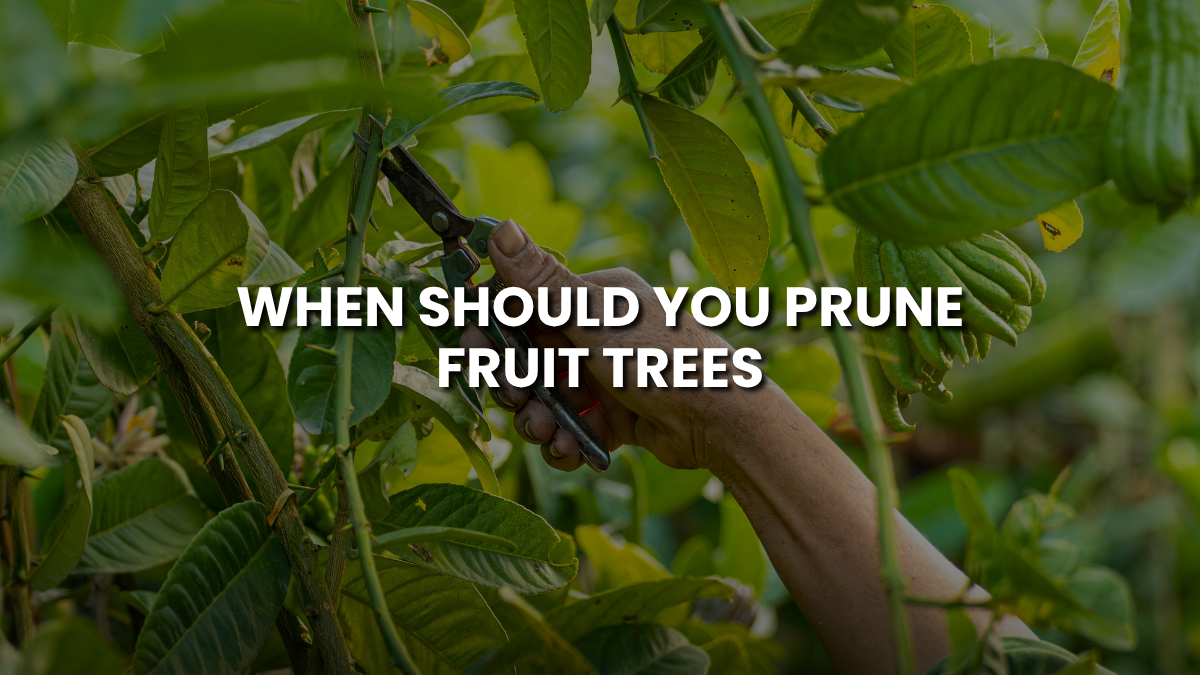
When Should You Prune Fruit Trees? A Complete Guide
Most fruit trees should be pruned during late winter, typically between late January and early March in the Northern Hemisphere. During this time, they are still dormant. This timing is necessary because it encourages strong spring growth, improves fruit production, and reduces the risk of disease.
However, the exact window depends on the type of tree you want to prune and the climate it is growing in.
The time to prune fruit trees is just as important as how you do it.
What is the Best Time to Prune Fruit Trees?
Late Winter: The Standard Window
For most deciduous fruit trees (like apples, pears, and plums), late winter (February to early March) is the standard time.
- The Benefit: Since the tree is dormant and leafless, you can clearly see the structure of the branches.
- The Result: Pruning while the tree is "asleep" triggers a vigorous growth spurt as soon as spring arrives.
Summer: Growth Control
If you have a fruit tree that is growing too fast or getting too large for its space, mid-to-late summer is the time to act.
Does the Month Actually Matter?
Yes, although not as much as the dormant period of the tree. The best months to prune apple, pear, and plum trees are late January and early March. In warmer climates like parts of Pakistan, India, or the southern US, this window can shift to December or January.
Is It Ever Too Late to Prune Fruit Trees?
It is not too late to prune fruit trees. However, the best practice is to prune trees before it has broken dormancy and leaf out.
Signs You've Missed the Window:
- Leaves are fully open
- The plant is actively flowering
- New shoots are several inches long
At this point, removing large limbs stresses the tree significantly. You can still remove dead, diseased, or crossing branches at any time of year.
How Do You Prune Fruit Trees Step by Step?
You have to follow a series of steps to prune the low-maintenance fruit trees correctly.
Step Zero: Assess the Situation First
Walk around the tree. Identify the main scaffold branches (the permanent framework), any dead or diseased wood, and branches that cross or rub. About 20–30% of the canopy can be removed in a single season.
First Step: The "Three Ds" Clean-Up Process
Remove the timber that is obviously troublesome before making any cuts. This opens up the tree and lets you see the structure.
- Dead: Remove branches that are brittle or have no buds.
- Damaged: Cut back branches broken by wind or weight.
- Diseased: Remove any wood showing signs of canker, fungus, or rot.
Second Step: Make the Heading Cuts
This is where you dictate the height and shape of the tree for the coming season.
- The 20% Rule: Avoid removing more than 20–25% of the tree's total canopy in a single year to avoid stressing it.
- Prune for Height: Cut back the previous year's growth by about one-quarter to keep the fruit within reach.
Third Step: Cut Back on New Growth to Help Fruiting Spurs Grow
Fruiting spurs grow on wood that is two to three years old on apple and pear trees. Cutting back the new growth from the previous year, which is termed "laterals," by around two-thirds would help the tree generate these fruiting spurs instead of lengthy, useless shoots.
Fourth Step: Make Clean Cuts at the Right Angle
Every cut should be made just above a healthy outward-facing bud, at roughly a 45-degree angle sloping away from the bud.
Common Mistakes to Avoid When Pruning Fruit Trees
Pruning at the Wrong Time of Year
Pruning stone fruits in autumn, or any tree when frost is still severe, is one of the most damaging mistakes.
Cutting the Branch Collar
The branch collar is the slightly swollen area where a branch meets the trunk. Cutting flush to the trunk removes this tissue, which is critical to wound closure.
Over-Pruning in a Single Season
A tree that loses more than 30% of its canopy in one go redirects all its energy into replacing that growth, usually as vigorous, unproductive water sprouts.
Ignoring Suckers and Water Sprouts Year-Round
Suckers grow from the rootstock below the graft union. Water sprouts grow vertically from the main branches, often after heavy pruning.
Get Thriving Fruit Trees From Gulab.pk
Explore a wide range of premium fruit plants and expert gardening essentials. Start growing your dream garden today with the help of expert horticulturists of Gulab.pk.
FAQs
What if I prune at the wrong time? Will it harm the tree?
Pruning at the wrong time usually won’t kill a tree, but it can reduce fruit production or expose it to disease. Some trees may lose buds if pruned too early or too late. It’s best to follow seasonal guidelines for each tree type.
How much should you prune off each year?
Generally, you should remove no more than 20 to 30% of the tree in a year. Over-pruning can stress the tree and slow its growth. Focus on removing dead, damaged, or crowded branches.
Why is my fruit tree not producing after pruning?
Heavy pruning can cause the tree to focus on leafy growth instead of fruiting. Cutting off fruiting wood or buds also reduces yield. It may take a season or two for the tree to return to normal production.